

We accept all health funds and are a preferred provider for Bupa and HCF. Payment plans are available too.
Clear aligners are a series of custom-made, removable trays. Each set moves your teeth a little at a time, and you switch to the next set every week or two.

Crooked or crowded teeth can make you self-conscious when you smile, talk or have your photo taken. Clear aligners gently move your teeth into place over time, using a series of clear, removable trays that most people won’t notice.
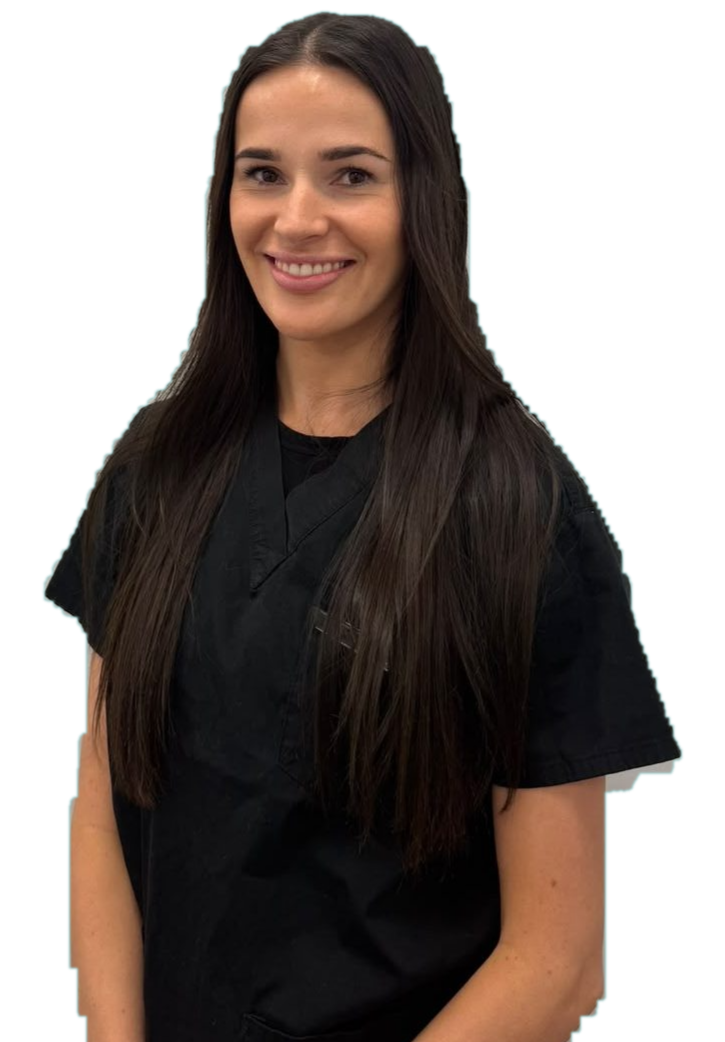
Clear aligner treatment at My Dentist Blackwood is led by Dr. Tina Le, who has a special interest in clear aligner orthodontics. We’ll explain the costs up front and check in with you regularly throughout treatment.

Every clean at our practice is done with EMS Airflow, a Swiss system that uses a fine spray of warm water, air and an ultra-fine powder to wash away plaque, bacteria and stains, with far less scraping. It’s gentler on teeth and gums, gets into spots traditional tools struggle to reach, and most patients find it far more comfortable. It’s not an add-on or an upgrade here, and there’s no extra charge. It’s simply how we clean. What is Airflow?


From children’s first check-ups to fillings, crowns, implants and cosmetic work, we look after most of your family’s dental needs under one roof.


We’re a preferred provider for Bupa Members First and HCF More For Teeth, so members pay less out of pocket, and eligible members often pay no gap for check-ups and cleans.


We’d rather earn a recommendation than buy an ad. Instead of big advertising budgets, we proudly sponsor a wide range of local sporting clubs and charities, and most of our team live locally too. We believe community support goes both ways, and we’re grateful to a community that has supported us just as much as we’ve supported it.

Clear aligners are made for your teeth and designed to fit around your lifestyle.
Clear aligners offer a nearly invisible teeth-straightening option. Made from a transparent plastic material, they blend seamlessly into your smile, allowing you to maintain confidence while undergoing treatment. Enjoy social interactions, presentations, and photos without worrying about noticeable orthodontic appliances.


Clear aligners are custom-made from a medical-grade thermoplastic material, providing a snug fit over teeth. Their smooth edges and the gentle pressure they exert shift teeth with minimal discomfort, especially compared to traditional metal braces. These aligners are designed for comfort and effectiveness, making orthodontic treatment more pleasant and efficient for patients.
Unlike fixed braces, clear aligners are removable, which makes treatment more convenient. You can keep eating the foods you enjoy, as you can easily take out your aligners before eating or drinking (except water). Prioritise your oral hygiene routine, as you can easily brush and floss without any obstruction.

Identifying suitable candidates for clear aligners involves a personalised assessment, providing optimal treatment outcomes suited to individual dental needs.

Clear aligners offer a subtle and effective way to gradually manage and improve dental misalignment, achieving desired results.
They are a preferred choice due to their ability to align teeth discreetly, as they seamlessly blend into your smile and appearance.
Individuals with demanding schedules appreciate clear aligners' flexibility, enabling them to take out aligners for events, meals, and oral hygiene routines.
Clear aligners are suitable for people who can commit to wearing the aligners for 20-22 hours daily.
Whether it’s a check-up, a gentle Airflow clean or something that’s been bothering you, our team will take the time to listen and look after you properly.
Book An AppointmentClear aligners and traditional metal braces are both orthodontic treatment options, but they differ in several ways.
One key aspect that makes clear aligners highly effective is the customised and individualised approach for each patient. The clear aligner process involves several steps to provide a precise fit and optimal results.
To achieve the desired results, it’s essential to wear clear aligners consistently as prescribed by your dentist. The aligners should be worn for 20-22 hours daily, removing them only for eating, drinking, brushing, and flossing.
It’s crucial to take out clear aligners when consuming anything other than water. Their design is intentionally removable to make eating comfortable and to prevent staining or damage from food and drinks. This also prevents food particles from being trapped, maintaining the effectiveness of clear aligners and their cleanliness.
The average treatment period varies depending on the complexity of the individual case and the specific aligner system being used. In general, aligners treatment may last anywhere from 6 to 18 months.
Clear aligners, fabricated from a medical-grade thermoplastic material, are generally more comfortable than traditional braces. Since they are custom-made to fit your teeth precisely, they can be easily removed and worn. There are also no metal brackets or wires to irritate the other parts of the mouth.
While mild discomfort or pressure may be experienced when using a new set of aligners, it should subside in a few days as your teeth move. This discomfort is often described as a feeling of tightness as the aligners work to move your teeth.
Since clear aligners are removable, you can brush and floss your teeth normally while undergoing treatment. This makes oral hygiene easier to maintain compared to traditional braces, where the wires and brackets can make brushing and flossing more challenging. With clear aligners, you can simply remove them for straightforward cleaning.
The frequency of dental visits during clear aligner treatment may vary based on your dentist’s recommendations. Generally, patients are scheduled for check-ups every 4 to 6 weeks to monitor progress and receive the next set of aligners.
If you lose or damage one of your aligners, it’s important to contact your dentist as soon as possible for guidance. You may be advised to:
Ignoring the loss or damage and not wearing an aligner for an extended period could lead to a setback in your treatment. Always consult your healthcare provider for personalised advice.
Clear aligners are removable, so you can take them out while playing sports or musical instruments to avoid damaging them. However, wearing a mouthguard during sports is essential to protect your teeth, even if you don’t have your aligners.
Yes, after completing the clear aligner treatment, you will likely need to wear a retainer to maintain the newly aligned position of your teeth and avoid shifting back to their original positions.
Like any medical or dental procedure, clear aligners have potential side effects that patients should be aware of. Understanding these potential side effects before starting clear aligner treatment is essential to making an informed decision about orthodontic care.
Proper cleaning and maintenance of clear aligners are essential for their effectiveness and longevity and the patient’s oral health during orthodontic treatment.
No, there are no dietary restrictions with clear aligners since they can be taken out while eating. Taking out your clear aligners is essential before consuming your favourite foods or beverages (except water). Leaving them in while eating can lead to staining, warping, or trapping food particles, contributing to bad breath and dental issues.
We’ve been looking after Blackwood families for more than 20 years. Book in with our friendly, mostly local team and see why so many patients recommend us to their family and friends.
Book An Appointment


Mondays – Fridays:
8:30 AM to 5:00 PM
First Thursday of the month:
8:30 AM to 7:00 PM
Saturdays – Sundays
CLOSED







 General Dentistry
 Cosmetic Dentistry
 Restorative Dentistry
 Dental Implants
 Clear Aligners
 Emergency Dentist
 Childrens Dentist