






You’ve lost a tooth—maybe during sport, an accident, or you were born without one. You’re wondering whether dental implants are suitable for your age.
Here’s the reality: some young Australians are choosing dental implants in their 20s and 30s. But is the timing right for you? The answer depends on whether your jaw has finished developing and your overall health.
This article explains the science behind timing, potential benefits of early implants, and key considerations. Individual assessment is essential—we’ll explain why that matters for your situation.
Contents Navigation
- 1. Summary of the Content
- 2. Why More Young Adults Are Considering Dental Implants
- 3. What's the Minimum Age for Dental Implants?
- 4. The Advantages of Getting Implants Early in Life
- 5. What to Consider Before Getting Implants in Your 20s or 30s
- 6. The Dental Implant Process: What to Expect in Your 20s and 30s
- 7. Frequently Asked Questions About Dental Implants for Young Adults
- 8. Frequently Asked Questions
- 9. Final Thoughts
Summary of the Content
- Young adults may need tooth replacement due to sports injuries, congenitally missing teeth, or decay.
- Jaw development determines when dental implants become an appropriate treatment option for you.
- Getting dental implants at a younger age may offer benefits in some cases, including the potential to preserve jawbone.
- Clinical factors such as jaw maturity, oral health, and lifestyle habits affect your suitability.
- The consultation process helps you understand the treatment stages and make clear, informed choices about your treatment.
- Financial considerations include costs, health fund cover, and available payment plan options.
Why More Young Adults Are Considering Dental Implants
Dental implants aren’t just for older adults anymore. More Australians in their 20s and 30s are choosing implants as a tooth-replacement option. For those who meet the clinical criteria, implants may be considered once jaw development is complete. Suitability varies significantly between individuals.
Common Reasons Young Adults Need Tooth Replacement
Some young adults in Adelaide require tooth replacement earlier than expected. Several common factors can lead to this, including active lifestyles and dental complications that develop over time.
- Sports injuries and accidents:
Adelaide’s active lifestyle comes with risks. AFL, rugby, cycling along the coast, surfing—these activities can all result in dental trauma. A stray elbow during a match, a fall from your bike, or an unexpected collision in the surf can mean losing a tooth in your 20s. - Congenitally missing teeth:
Some people never develop certain adult teeth. Research indicates that approximately 6.3% of Australians are born missing at least one adult tooth. The most commonly missing teeth are the lateral incisors or premolars. If you have had a gap since your teenage years and retainers or bonding no longer meet your needs, there are other options. A registered dental practitioner can assess your circumstances and discuss suitable long-term treatment options, including risks and benefits. - Failed previous dental work:
That large filling you got as a teenager or the root canal treatment from your university days may need replacing eventually. Sometimes, previous dental work fails in early adulthood, and the tooth can’t be preserved. When a tooth that has had multiple treatments needs extraction, patients often seek a replacement that requires minimal ongoing care. Choosing a restoration with durable materials and proper planning can reduce the need for repeated maintenance over time. - Severe decay:
Some teeth cannot be preserved despite regular dental care. Deep decay, fractures, or infections may require extraction, even in younger patients. In these cases, replacing the tooth sooner rather than later can help protect surrounding teeth and bone.
Why Implants Weren’t Always Recommended for Younger Patients
Dentists recommended delaying dental implants until middle age, due to concerns that a developing jaw might interfere with proper placement. However, current research shows that waiting too long may lead to bone loss, which can complicate future procedures. The key factor is jaw maturity, not a specific age. Your dentist can assess your situation to determine whether you’re a suitable candidate.
What's the Minimum Age for Dental Implants?
There is a minimum age requirement for dental implants, though it’s not about reaching a specific age, such as 18 or 21. What matters is whether your jaw has fully developed. Jaw growth completes between ages 18 and 25 for most individuals. Your dentist will need to assess your situation before determining whether treatment is suitable.
The Science Behind Jaw Maturity
Dental implants are surgically placed in your jawbone and remain in place. Natural teeth, however, shift subtly as your jaw continues developing throughout early adulthood.
Even after your teenage years, jawbone changes occur vertically and horizontally into your mid-20s. If an implant is placed before jaw growth is complete, surrounding teeth may shift while the implant remains fixed. This can make the implant appear sunken or misaligned over time.
Research shows that females complete jaw growth between ages 16 and 18, while males complete it between ages 17 and 20. However, for front teeth implants, waiting until your early 20s is often recommended for all genders because of ongoing subtle facial changes. Your dentist can assess your jaw development during a consultation.
Why Some Dentists Recommend Waiting Until the Mid-20s
The location of your missing tooth can affect timing recommendations. For back teeth like molars, placement between 18 and 20 may be appropriate.
Front teeth often require waiting until age 20-25 to reduce aesthetic complications related to jaw development. Individual variation is significant, as jaw maturation timing varies among people.
Modern diagnostic tools, including X-rays and 3D imaging, help assess bone density and jaw structure. Your dentist will evaluate your jaw development and recommend an appropriate timing based on your circumstances.
The Advantages of Getting Implants Early in Life
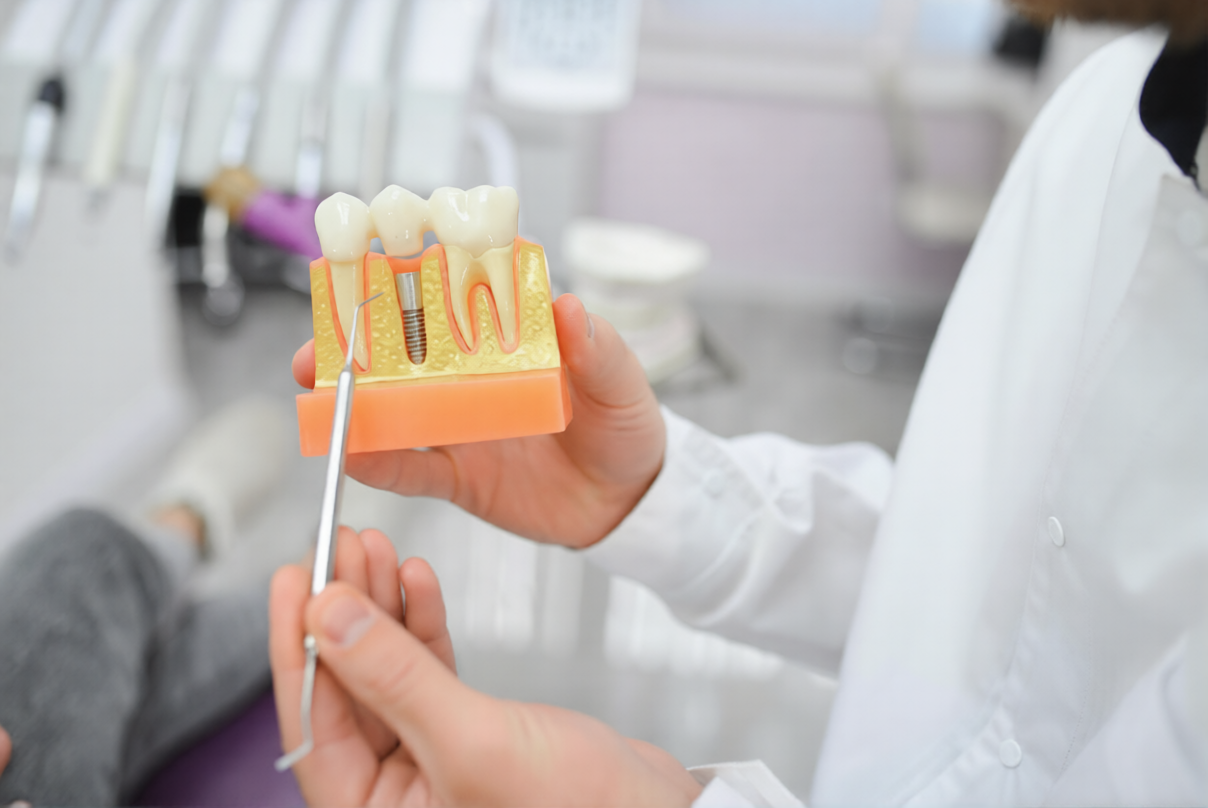
If you’re in your 20s or 30s and meet the clinical requirements, you may be a good candidate for dental implants. A fully developed jaw and good oral health are essential prerequisites for treatment. Potential advantages include decades of use and optimal healing capacity in younger patients. These represent potential benefits based on research, not expected individual outcomes.
Long-Term Investment: Decades of Use
Longevity is a significant consideration when evaluating tooth replacement options. Research indicates implants can last 25+ years with proper care.
Dental Implant Alternatives (Traditional Bridges vs. Dentures)
| Tooth Replacement Option | Typical Lifespan | Maintenance Requirements |
| Traditional Bridges | 5-15 years | May require replacement; adjacent teeth need preparation |
| Dentures | Variable | Ongoing adjustments and eventual replacement are needed |
| Note: Consultation required to determine the most appropriate approach for your circumstances. | ||
Implants usually have higher upfront costs than some alternatives. The long-term cost-effectiveness depends on individual circumstances, the restoration’s longevity, and maintenance needs. Discuss costs and value with your dentist.
Optimal Healing and Success Rates
Younger patients may experience certain advantages in healing and recovery processes. Early adulthood typically supports strong regenerative capacity, which can aid osseointegration—the fusion of bone with the implant post. Healthy bone density is common in younger adults without specific underlying conditions, potentially providing a stable foundation for implant placement. Studies indicate that dental implants have a success rate of approximately 95–98% over 10 years.
Younger patients often have fewer complicating health factors affecting treatment outcomes. Conditions that compromise healing are less common in this age demographic. Recovery after implant placement may be shorter, with many patients returning to normal activities within days.
Preventing Bone Loss Early
Tooth loss can lead to changes in the surrounding jawbone structure. Without stimulation from a tooth root, the bone may gradually resorb.
Dental implants function similarly to natural tooth roots by providing stimulation. They provide stimulation that may help maintain bone density in the area by engaging under normal chewing forces.
Early bone preservation can support long-term facial structure and appearance. Significant bone loss may affect facial aesthetics over time if not addressed. Waiting years before replacement may require bone grafting, which adds time and cost to the treatment.
Early intervention may help avoid these complex procedures in some cases. However, individual circumstances vary, and outcomes differ accordingly. Your dentist can discuss suitable options during your consultation.
Avoiding Repeated Dental Work
Tooth implants are designed to function independently within the jawbone. This may reduce the need for repeated procedures, which some young adults prefer.
Dental implants are placed directly into the jawbone without requiring preparation of adjacent teeth. In contrast, traditional bridges require altering healthy neighbouring teeth. Enamel must be removed to support the bridge, irreversibly modifying the teeth. Dentures require regular adjustments as your mouth changes, and refitting may be necessary over time.
What to Consider Before Getting Implants in Your 20s or 30s
Dental implants may not be appropriate for every patient, even if they are at a suitable age for treatment. Key factors include completed jaw growth, current oral health status, and lifestyle habits. Financial considerations also play an important role in comprehensive treatment planning decisions. This represents a significant commitment that requires a thorough assessment of your circumstances.
Clinical Factors That Affect Suitability
Several clinical factors help determine whether dental implants may be suitable for you.
- Your dentist will assess jaw maturity through X-rays and clinical evaluation. Adequate bone density and volume are needed to support the implant. Oral health must be good before treatment can proceed. Gum disease requires management first, and active decay needs treatment beforehand.
- Your overall health affects healing and integration outcomes. Conditions like uncontrolled diabetes can impact healing processes. Your dentist will review your complete medical history during the consultation.
- Lifestyle factors, including smoking, can affect dental implant success rates. Smoking may compromise healing and long-term stability. Being transparent about your habits helps provide realistic guidance.
Your dentist will assess these factors during your initial consultation.
The Commitment Involved
Dental implants require commitment to treatment and ongoing care.
- The process involves multiple appointments over several months. These include consultation, surgical placement, healing, and crown fitting stages.
- Daily brushing and flossing help maintain the health of dental implants over the long term. These habits support the implant’s function and longevity.
- Regular dental checkups allow your dentist to monitor your dental implant. Professional cleaning helps maintain oral health.
- Mouthguards are recommended during contact sports. This helps protect both your implant and natural teeth.
Following aftercare instructions promotes healing and integration. Your dental team will provide guidance after each treatment stage.
Financial Considerations for Young Adults
Dental implant costs vary based on your clinical needs. The investment reflects surgical procedures, quality materials, and the dentist’s experience.
Medicare doesn’t cover dental implants in Australia. Private health fund cover depends on your specific policy level. Contact your health fund directly to confirm your cover details and eligibility.
Payment plans are available at My Dentist Blackwood to help manage treatment costs. Flexible payment arrangements can suit different financial circumstances and budgets. Full terms and conditions are available upon request at our dental clinic.
Consider long-term value when comparing tooth replacement options. Alternative treatments may require repeated procedures and adjustments over extended timeframes. Cumulative expenses over decades can become substantial with other tooth-replacement approaches. Your dentist can provide a detailed treatment quote following your comprehensive assessment.
The Dental Implant Process: What to Expect in Your 20s and 30s
The implant process remains consistent regardless of age once jaw maturity is confirmed. Treatment typically spans four to nine months from initial consultation to completion. The process includes consultation, surgical placement, healing period, and crown fitting. Your timeline depends on your healing capacity and the requirements for bone grafting.
Step 1 – Initial Consultation and Assessment
Initial consultation includes a comprehensive oral health assessment. Your dentist examines your teeth, gums, and overall oral health.
X-rays help reveal your bone structure and density levels. We may recommend 3D scans for detailed treatment planning. These images show precise bone dimensions and identify any underlying concerns.
Your dentist assesses jaw maturity and bone density to confirm treatment suitability. This evaluation determines whether bone grafting may be needed first.
We’ll discuss your goals, concerns and realistic treatment timelines. You can ask questions about any aspect of your care. We then provide a detailed treatment plan, including clear cost estimates.
Step 2 – Implant Placement Surgery
The surgical procedure is performed under local anaesthesia. Sedation options are available for patients who experience dental anxiety.
A titanium post is placed into your jawbone during the procedure. The implant acts as an artificial root for your replacement tooth. Surgical placement usually takes one to two hours per implant.
For visible front teeth, a temporary restoration may be placed immediately. This maintains your appearance during the healing period.
Most patients manage post-operative discomfort with over-the-counter pain relief. Recovery involves eating soft foods for a few days. Your dental team provides detailed aftercare instructions.
Any surgical or invasive procedure carries risks. Before proceeding, seek a second opinion from a qualified dental practitioner.
Step 3 – Healing and Osseointegration
During the healing phase, bone fuses with the implant through osseointegration. This process usually takes three to six months to establish stability. Healing times can vary between individuals. Your dentist will monitor progress through follow-up appointments during this period.
The implant remains beneath the gum tissue while healing occurs. Temporary replacement options may be available to maintain appearance and function. This waiting period supports long-term implant stability. Your dentist can discuss what to expect and address any concerns throughout treatment.
Step 4 – Abutment and Crown Placement
After healing, the abutment connector is attached to link the implant to the crown. Impressions are taken using digital scanning for precision and comfort.
Your custom crown is designed to match the surrounding teeth in colour and shape. The final fitting includes placement and bite alignment checks. Minor adjustments support proper function with existing teeth.
Young Adult Considerations
Young adults often have lifestyle factors to consider when planning treatment. Treatment timing can accommodate sports schedules and important events. Some patients choose back teeth first for appearance. Avoid long trips during the initial healing period to stay close to your dental team.
Frequently Asked Questions About Dental Implants for Young Adults
Young adults often have specific questions about dental implants and timing considerations. Below, we address the most common concerns we hear at our dental clinic.
Can I get dental implants at 21?
Whether dental implants are suitable at 21 depends on your jaw de velopment. At this age, many people have completed sufficient jaw growth, particularly in the back teeth. Females mature earlier, while males may need to wait longer for their front teeth to erupt. X-rays and assessment reveal if your jaw growth has completed adequately.
What if I’m missing a front tooth—should I wait or get an implant now?
Missing a front tooth affects the appearance of the smile, so seeking an immediate option is understandable. Front teeth often require a more conservative approach, with waiting until the early to mid-20s recommended. Temporary options such as bonded retainers, Maryland bridges, or temporary crowns can maintain the natural appearance. Your dentist can show you case examples during the consultation and discuss timing.
Are dental implants worth it at a young age?
This is a personal decision based on your priorities and circumstances. Implants can be a valuable long-term investment for many young adults. An implant placed at 25 may function for 30+ years, unlike bridges needing replacement. Consider upfront costs, treatment timelines, and surgical procedures against long-term bone-preservation benefits.
Will my dental implant last my whole life if I get it in my 20s?
Dental Implants can last for decades, though they require ongoing maintenance. They can last 25+ years with proper care. Factors affecting longevity include oral hygiene, regular dental visits, and avoiding smoking consistently. The crown may need replacement after 10-15 years, though the post often lasts longer.
What happens if I don’t replace a missing tooth in my 20s?
Leaving a gap may lead to bone loss, tooth movement, and changes in bite alignment. Adjacent teeth can tip into the space, while opposing teeth may over-erupt. The longer you wait, the more bone loss typically occurs, which may require grafting. A professional assessment helps you understand your specific situation and the appropriate timing for treatment.
Frequently Asked Questions
Here are answers to common questions about dental implants and pregnancy. For advice specific to your situation, schedule a consultation with your dentist and obstetrician to discuss timing and treatment options.
Can I get a dental implant in my second trimester?
Implant surgery is not recommended during pregnancy. While the second trimester is often considered more suitable for necessary dental work, such as addressing infections, elective procedures are typically deferred. Since implants are elective, waiting until after delivery is commonly advised.
However, you can attend consultations, begin treatment planning, and complete preparatory tasks such as cleaning during your second trimester. This allows you to prepare without undergoing surgery. Discuss your specific situation with your dentist and obstetrician.
What happens if I find out I’m pregnant during implant treatment?
Contact your dentist immediately to discuss your treatment plan. If you’re at the consultation stage, you’ll pause until after delivery. If the implant is already placed and healing, your dentist will likely recommend delaying the final restoration until after your baby arrives.
There’s no need to worry—your dentist will adjust the timeline to suit your situation. Your dentist and obstetrician will work together to determine the most appropriate approach for you and your baby.
Are dental X-rays safe during pregnancy?
Modern dental X-rays use minimal radiation but are avoided during pregnancy, especially in the first trimester when your baby’s organs are developing. Emergencies may require X-rays with proper protection (lead apron and thyroid collar). Implant planning X-rays are elective and can wait until after delivery. The preference is always to postpone X-rays unless medically required.
How long do I need to wait after giving birth?
Many patients wait three to six months postpartum to allow for physical recovery and routine stabilisation. There’s no strict medical timeline—it depends on your energy, baby’s schedule, and healing progress. If you had a caesarean or complications, you may need more time. Schedule implant treatment at a time that suits your family—there’s no rush.
Can I get dental implants while breastfeeding?
This depends on individual circumstances. The local anaesthesia used for implant placement and some antibiotics prescribed afterwards may be considered suitable for breastfeeding. However, you should discuss the specific medications your dentist plans to use with both your dentist and healthcare provider before proceeding.
Some mothers choose to pump and store breast milk beforehand if they have concerns about medication exposure during the immediate post-operative period. Timing your appointments around your baby’s feeding schedule can help minimise disruption and support your comfort throughout the procedure and recovery.
Final Thoughts
Age alone doesn’t determine dental implant suitability. Jaw maturity and overall oral health are key factors your dentist assesses. Implants may offer long-term benefits, including bone preservation and lasting function. They may reduce the need for repeated dental work over time.
Whether you’re too young for dental implants depends on your circumstances. If your jaw is fully developed and your oral health is good, implants may be an option.
A professional assessment provides clarity. At My Dentist Blackwood in Adelaide, Dr. Tina Le can evaluate your situation. A consultation helps you understand your options and make a considered decision.
Written by: Dr. Tina Le, General Dentist
AHPRA Registration: DEN0001411332





 General Dentistry
 Cosmetic Dentistry
 Restorative Dentistry
 Dental Implants
 Clear Aligners
 Emergency Dentist
 Childrens Dentist