
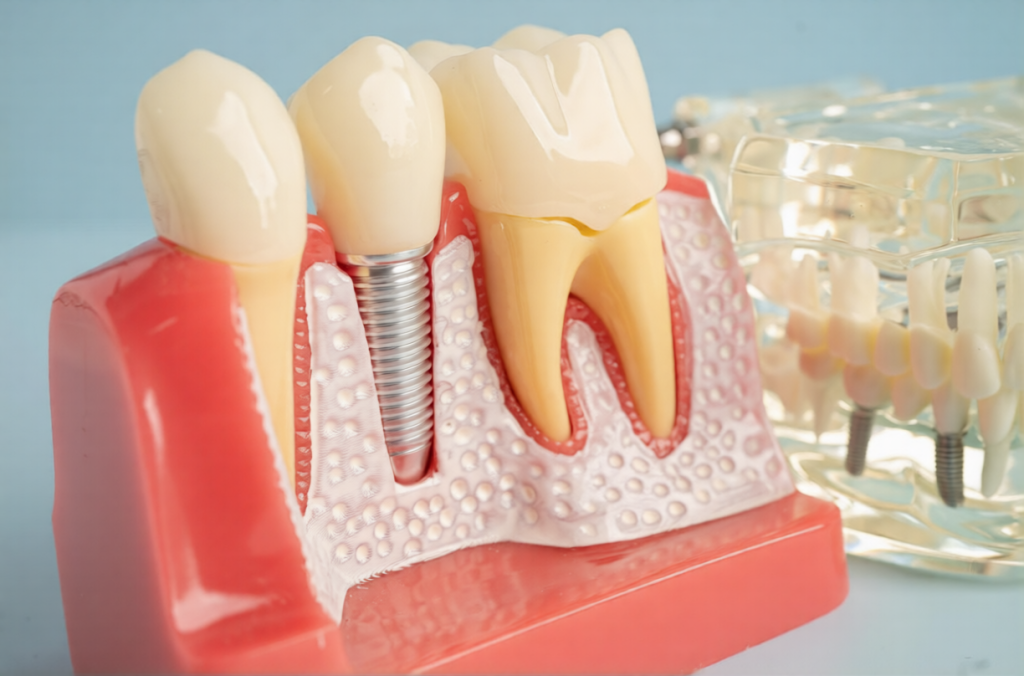




Osseointegration is a fundamental process in dental implant treatment. It describes how dental implants fuse to bone tissue in the jaw, creating a stable foundation for tooth replacement. Understanding this biological process can help you make informed decisions about your care.
This article covers the dental implant healing process, timeline, and factors affecting dental implant success. You will also learn why implant stability and bone quality play important roles in treatment outcomes.
Contents Navigation
- 1 Summary of the Content
- 2 What is Osseointegration in Dental Implants
- 3 The Role of Osseointegration in Long-Term Implant Stability
- 4 The Osseointegration Timeline: Understanding the Dental Implant Healing Process
- 5 Factors That Influence Osseointegration Success
- 6 How Dentists Assess Osseointegration Progress
- 7 When Osseointegration Fails
- 8 How to Support Dental Implant Healing
- 9 Final Thoughts
Summary of the Content
- Osseointegration is the biological process in which jawbone tissue grows around and bonds to a titanium dental implant surface.
- The dental implant healing process generally takes three to six months, depending on individual factors and the jawbone location.
- Implant stability and bone quality are closely linked, and adequate bone density is important for achieving successful outcomes.
- Factors affecting dental implant success include overall health, oral hygiene, smoking status, and following post-operative instructions.
- Only qualified dental professionals can accurately assess whether dental implant bone integration has occurred through clinical examination.
- While success rates are generally high, individual outcomes can vary, and any surgical procedure carries risks.
- Patient behaviours such as maintaining good oral hygiene and avoiding smoking can support the healing process.
What is Osseointegration in Dental Implants
Osseointegration refers to the direct structural and functional connection between living bone and the surface of a dental implant. The term comes from the Latin words ‘os’ (bone) and ‘integrare’ (to make whole). In simple terms, it describes how dental implants fuse to bone in your jaw.
When a dentist places an implant, they insert a small titanium post into your jawbone. Titanium is a biocompatible material, which means your body does not reject it as a foreign object. Instead, your bone cells recognise the implant surface and begin growing toward it.
The process involves several key stages that unfold over time.
- Initial placement:
The titanium implant is surgically positioned within the jawbone at a carefully planned location. - Biological response:
Your body initiates a healing response, with bone cells called osteoblasts migrating toward the implant surface. - Bone formation:
New bone tissue gradually forms on and around the implant, creating direct contact with the titanium. - Mature integration:
Over time, mature bone develops, establishing a stable connection that can support chewing forces.
Each stage builds upon the previous one, gradually creating the strong bond needed for a functional restoration.
It is important to understand that dental implant bone integration is not like welding two pieces of metal together. Rather, it involves living tissue adapting to and growing around the implant. There is often a thin protein layer between the bone and the titanium surface. The success of this interface depends on multiple factors, including the implant material and surgical technique.
The biocompatibility of titanium is essential to this process. Unlike other materials that might trigger rejection or inflammation, titanium allows bone cells to attach and proliferate on its surface. This unique property enables successful bone integration for many patients.
The Role of Osseointegration in Long-Term Implant Stability
When osseointegration occurs effectively, it creates a foundation that may support chewing and biting forces similar to those of natural teeth. Successful dental implant bone integration can contribute to long-term stability in several ways.
- Structural support:
A well-integrated implant can withstand chewing forces, which can range from 50 to 250 pounds, depending on the tooth’s location. - Longevity:
When osseointegration occurs effectively, implants may function for many years with appropriate care and maintenance. - Functional ability:
Integrated implants can allow the restoration to function similarly to a natural tooth root, providing anchorage for crowns or bridges. - Bone preservation:
Unlike dentures that sit on the gum surface, integrated implants may help maintain jawbone density by providing stimulation to the bone tissue. - Aesthetic considerations:
Stable implants can support natural-looking restorations that blend with surrounding teeth.
These benefits explain why dental implants have become a popular choice for tooth replacement.
What makes dental implants different from other tooth replacement options is their integration with the jawbone. Bridges rely on neighbouring teeth for support, while dentures rest on the gum tissue. Implants integrate directly into the bone structure, which can provide a level of stability that surface-based options cannot match.
Results vary based on individual factors, including bone health, oral hygiene, and overall medical conditions. Your dentist will assess your specific situation to determine whether implants may be suitable for you.
The Osseointegration Timeline: Understanding the Dental Implant Healing Process
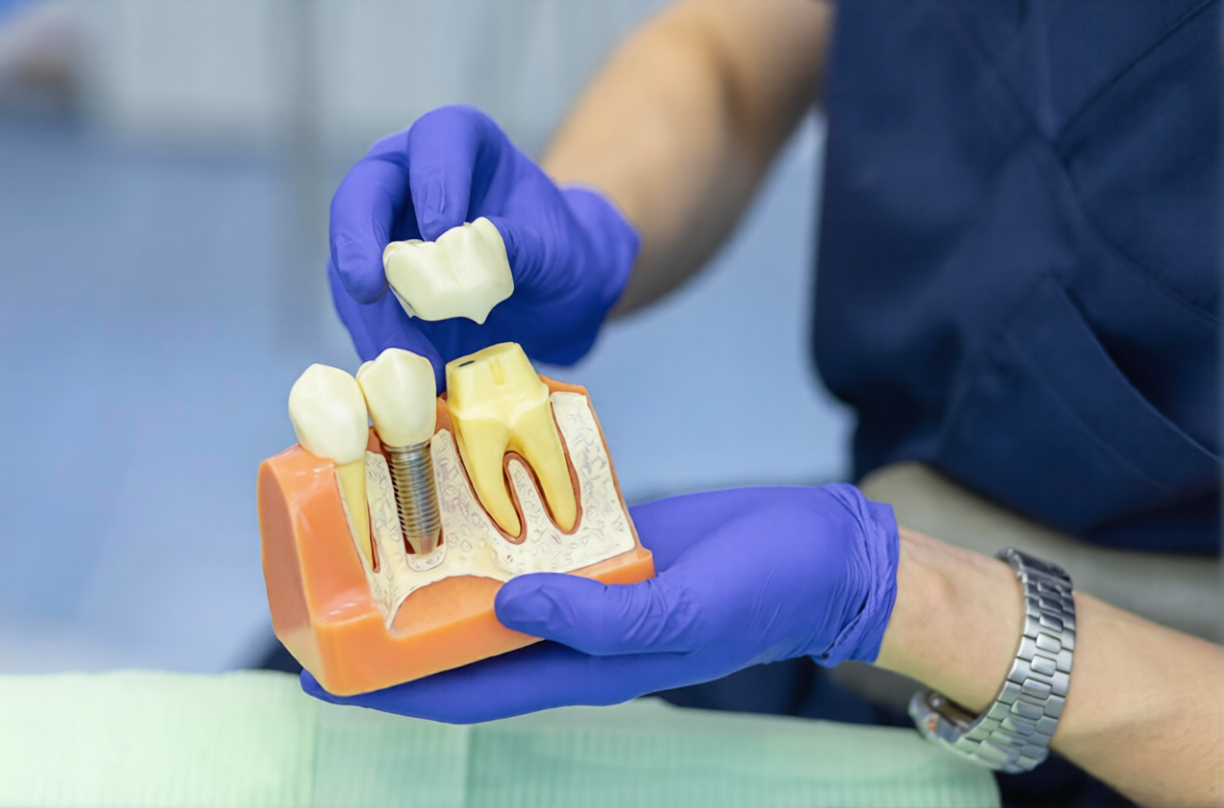
The dental implant healing process follows a predictable pattern, though individual healing times may vary depending on several factors.
Phase 1: Immediate Post-Placement (First 24-72 hours)
The first few days after implant placement involve initial wound healing. Your body begins responding to the surgical procedure immediately.
- A blood clot forms around the implant site, which is essential for the healing process.
- An inflammatory response occurs, which is normal and necessary for tissue recovery to begin.
- Patients may experience some swelling, minor discomfort, and possible bruising in the area.
- Following post-operative instructions carefully during this phase is particularly important.
This initial phase sets the stage for the bone healing that follows.
Phase 2: Early Bone Healing (First 2-4 weeks)
During the first few weeks, early bone formation begins around the implant surface.
- Woven bone (immature bone tissue) begins to form around the implant.
- Primary stability from the initial surgical placement remains important during this phase.
- Patients should avoid disturbing the implant site and follow dietary recommendations.
- Soft tissue around the implant begins to heal and adapt.
Careful attention to post-operative care during this phase supports the developing bone-to-implant connection.
Phase 3: Active Osseointegration (Weeks 4-12)
This phase represents the most active period of how dental implants fuse to bone tissue.
- Bone deposition on the implant surface continues at an increased rate.
- Woven bone is gradually replaced by stronger lamellar bone.
- Bone-to-implant contact increases progressively during this time.
- Implant stability often increases as integration progresses.
The bone transformation occurring during this phase is critical for long-term implant function.
Phase 4: Bone Maturation (3-6 months)
The final phase involves bone remodelling and maturation. The dental implant healing process generally reaches completion during this period.
- Bone remodelling continues as mature bone tissue develops.
- Maximum bone-to-implant contact is often achieved.
- The implant may be ready for loading with a crown or restoration.
- Your dentist will assess when integration is sufficient for the next treatment stage.
Upon completion of this phase, your dentist will determine if you are ready for the final restoration.
The timeline for osseointegration varies by jaw location. The lower jaw (mandible) generally requires three to four months, while the upper jaw (maxilla) often needs four to six months. This difference relates to variations in bone density between these areas. Individual factors can extend or shorten these general timeframes.
Healing timelines vary between individuals. The dentist monitors progress through clinical examination and may use imaging to assess bone development. Rushing the process can compromise long-term outcomes, so patience during healing is an investment in the stability of your restoration.
Factors That Influence Osseointegration Success
Multiple factors can influence whether dental implant bone integration occurs successfully. Understanding these factors affecting dental implant success can help you prepare for treatment and support healthy outcomes. Your dentist will evaluate these factors during the consultation.
Patient-Related Factors
- Bone quality and quantity:
Implant stability and bone quality are closely connected. Adequate bone density is generally needed for successful integration. Previous tooth loss can lead to bone resorption over time. When insufficient bone is present, bone grafting may help in some cases. Age-related changes can also affect bone healing capacity. - Overall health conditions:
Individual health conditions can affect healing. Uncontrolled diabetes may impair the body’s healing response. Autoimmune conditions can affect bone formation. Certain medications impact bone metabolism. Your dentist will assess your specific case and medical history. - Oral health status:
Active gum disease must generally be addressed before implant placement. Good oral hygiene is essential throughout the healing period. Infection at the site can prevent proper integration. Bite force issues, such as grinding, can affect early stability. - Patient behaviours:
Following post-operative instructions is one of the most controllable factors affecting dental implant success. Avoiding smoking during healing is particularly important, as smoking significantly reduces success rates. Maintaining excellent oral hygiene, attending follow-up appointments, and avoiding disturbance of the implant site all contribute to healthy outcomes.
Implant-Related Factors
- Implant material and design:
Titanium’s biocompatibility enables bone integration. Surface texture affects how bone cells attach to the implant. Thread design influences primary stability. The quality of the implant system used matters for predictable outcomes. - Placement technique:
Precise surgical placement is critical for successful outcomes. Avoiding excessive heat during placement is important, as bone tissue is sensitive to temperature elevation. Achieving primary stability and proper positioning supports how dental implants fuse to bone over time. - Loading protocol:
Traditional protocols involve delayed loading after osseointegration is complete. In specific cases, immediate or early loading may be considered. Loading timing depends on individual factors, including initial stability and bone quality.
Anatomical Factors
Location within the mouth affects the healing process of dental implants. The upper jaw generally has less dense bone than the lower jaw. Front teeth and back teeth have different bone characteristics. Each area presents unique considerations that your dentist will evaluate.
Some factors can be optimised before implant placement. Smoking cessation, blood sugar management for diabetic patients, and addressing existing oral health issues are within the patient’s control. Other factors, such as implant selection, bone grafting needs, and monitoring progress, require professional management.
How Dentists Assess Osseointegration Progress
Only qualified dental professionals can accurately assess whether osseointegration has occurred. Your dentist will monitor integration through clinical examination and imaging at appropriate intervals.
Clinical assessment methods include several approaches that dentists may use.
- Percussion testing:
The dentist taps the implant and listens to the sound it produces, which can indicate whether bone surrounds the implant. - Mobility testing:
The dentist checks for any movement of the implant, as successfully integrated implants should remain completely stable. - Radiographic evaluation:
X-rays can show the relationship between bone and implant, though they have resolution limitations. - Resonance frequency analysis:
Some clinics use specialised devices to measure implant stability through vibration frequencies.
These methods help your dentist determine the appropriate timing for your final restoration.
Patients should not attempt to test implant stability themselves. General signs of healthy healing include the absence of persistent pain after the initial recovery period. You may also notice no ongoing swelling and a healthy appearance of the gum tissue around the implant site.
- Contact your dentist if you experience any of the following concerns.
- You have persistent pain that continues beyond the normal healing period.
- You notice swelling that does not subside or returns after initially improving.
- You feel any sensation of movement or looseness at the implant site.
- You observe unusual discharge around the implant area.
- You experience difficulty with a temporary restoration if one was placed.
Promptly reporting these symptoms allows your dentist to address any issues early.
Regular follow-up appointments are essential for monitoring the dental implant healing process. Your dentist will schedule these at appropriate intervals based on your individual treatment plan.
When Osseointegration Fails
While dental implant success rates are generally high, individual outcomes can vary.
Implant failure can occur in two main ways.
- Early failure:
This occurs during the osseointegration period before loading, when the bone fails to integrate with the implant surface. - Late failure:
This occurs after successful initial integration and loading, when integration is lost over time due to various factors.
Each type of failure has different causes and implications for re-treatment.
Common causes of integration failure include various patient and procedural factors.
- Infection at the implant site, known as peri-implantitis, can destroy the bone-implant connection.
- Insufficient bone quality or quantity at the placement site may prevent adequate integration.
- Excessive loading before adequate integration has occurred can disrupt the healing process.
- Complications during surgical placement may impair the implant’s integration.
- Patient health factors, such as uncontrolled diabetes or smoking, can impair healing.
- Inadequate oral hygiene during and after healing increases the risk of complications.
Research suggests that overall success rates for dental implants range from 90% to 95% when placed by qualified practitioners, though these rates vary based on multiple factors. Most failures occur within the first year of placement. Early detection and intervention are important for managing complications.
If integration fails, the implant generally needs to be taken out. After a bone healing period, re-treatment is often possible. Success with a second attempt depends on addressing the factors that contributed to the initial failure.
Prevention strategies include thorough pre-treatment assessment and the management of existing oral health issues. Optimising patient health before surgery, following post-operative instructions, and maintaining good oral hygiene also help.
How to Support Dental Implant Healing
Following these guidelines can support healthy healing, though individual results vary. Your dentist will provide specific instructions based on your situation, which take precedence over general advice.
Before Treatment
Preparing for your implant procedure can help create favourable conditions for healing.
- Address any existing oral health issues, such as gum disease or cavities, before your procedure.
- Discuss your complete medical history and current medications with your dentist during consultation.
- If you smoke, stopping several weeks before surgery may improve healing outcomes.
- Ask questions and confirm that you fully understand the treatment process.
Taking these steps before surgery can help set the stage for a smoother recovery.
Immediately After Placement
The first few days after surgery are crucial for initial healing.
- Follow all post-operative instructions carefully as provided by your dentist.
- Take prescribed medications as directed to manage discomfort and prevent infection.
- Apply ice to reduce swelling if recommended by your dentist.
- Eat soft foods and avoid chewing near the surgical site.
- Rest adequately and stay hydrated to support your body’s healing response.
Following these guidelines during the immediate post-operative period supports early healing.
During the Healing Period
The weeks and months following placement require ongoing attention to support osseointegration.
- Maintain careful but thorough oral hygiene as instructed by your dental team.
- Use prescribed antimicrobial rinses if recommended by your dentist.
- Avoid smoking and limit alcohol consumption during the healing phase.
- Eat a nutritious diet with adequate protein, calcium, and vitamins to support bone health.
- Avoid hard, sticky, or crunchy foods that could disturb the implant site.
- Attend all scheduled follow-up appointments so your dentist can monitor progress.
Consistent attention to these practices throughout healing supports the integration process.
For Long-Term Care
Once your implant is fully restored, ongoing maintenance helps protect your investment.
- Brush twice daily with a soft-bristled toothbrush to keep the area clean.
- Floss daily using techniques appropriate for implants as demonstrated by your dentist.
- Use interdental brushes, as recommended by your dentist, for additional cleaning.
- Attend regular professional cleanings and check-ups as scheduled.
- Wear a protective nightguard if you grind your teeth to prevent excess force on the implant.
- Continue managing any chronic health conditions that could affect oral health.
These long-term habits help maintain the health of your implant and surrounding tissues.
These strategies may help support osseointegration, but cannot guarantee success. Contact your dentist promptly if you experience excessive pain, signs of infection, or any concerns about your healing progress.
Final Thoughts
Osseointegration is the biological foundation that enables dental implant bone integration to occur. Understanding how dental implants fuse to bone can help reduce anxiety about the process. The dental implant healing process generally takes three to six months. The timeline depends on factors affecting dental implant success, such as bone health and patient behaviours.
Implant stability and bone quality play important roles in outcomes. You can actively support healing by following your dentist’s instructions, maintaining good oral hygiene, avoiding smoking, and attending all follow-up appointments. While individual results vary, these behaviours can contribute to favourable conditions for integration.
If you are considering dental implants, a consultation with a qualified dental professional is the appropriate first step. Before proceeding with treatment, seek a second opinion from an appropriately qualified health practitioner if you have any uncertainties.
Important Information
Any surgical or invasive procedure carries risks. Before proceeding, you should seek a second opinion from an appropriately qualified health practitioner. Individual circumstances vary, and outcomes may differ between patients. A consultation is required to determine your suitability for dental implants.
This information is provided by My Dentist Blackwood. For appointments or enquiries, please contact the clinic directly.


 General Dentistry
 Cosmetic Dentistry
 Restorative Dentistry
 Dental Implants
 Clear Aligners
 Emergency Dentist
 Childrens Dentist